Dispatch 006: CHEERS AT ANGOLA

Land disappears from view in our drive over Lake Pontchartrain. My father drove, my mother sat next to him, and my brother and I sat in the back bucket seat of a beige Plymouth Voyager. We would sit listening to the rhythm of the joints bounce every few seconds for twenty-four miles. Unless my father turned the radio on to AM for Michael Savage. A talk show for politics. Hours of disdain for every decision.
We exited the bridge and turned onto the highway south toward the ole country. The road follows the swamp. I watched for ripples in the water, eyes above the algae, a monster lurking underneath the cypress-lined bayou.
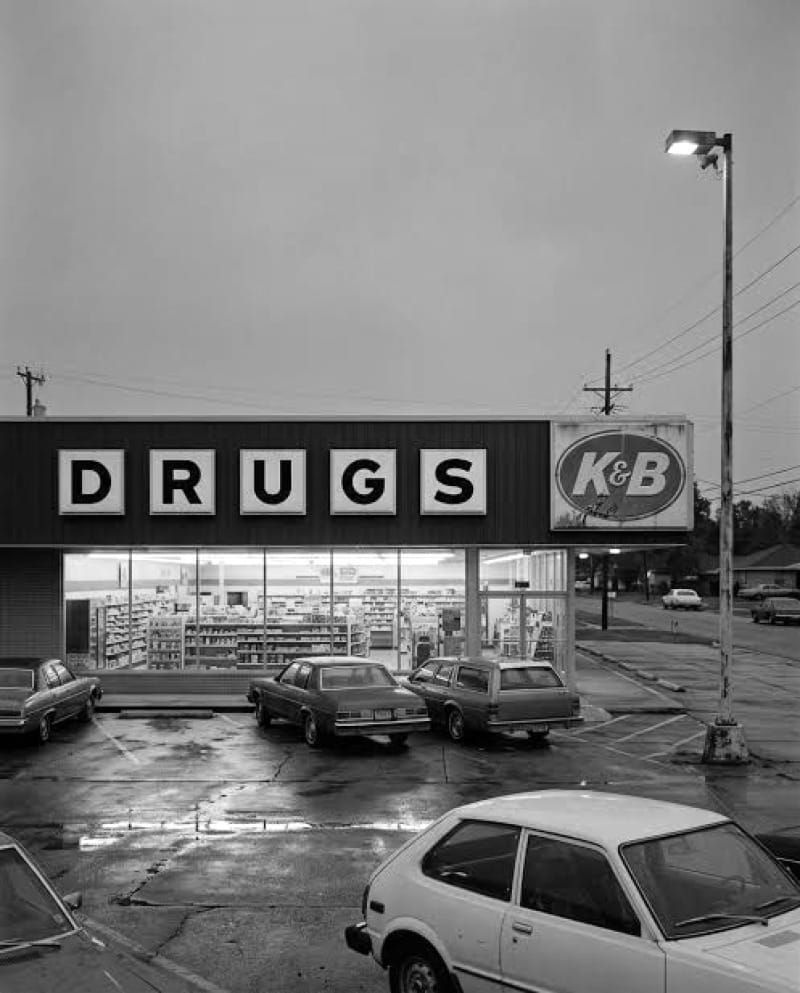
Before the Hale Boggs Bridge, which crossed the Mississippi into those green sugar cane farms I longed to walk, we turned off the highway. The bayou, the swamp, ends without incident, remaining unseen. Strip malls, with overgrown grass. Parking lots. Paint faded. Cars aligned on the chipped concrete as their owners pleased. Holes in the roads to dodge.
Another turn into the neighborhood that would indicate a boundary but an endless marsh of homes with an arm’s width between them awaits. My family lived within. A small brick home. Different, as every house is different, but the difference keeps it hidden. My grandmother, with an apron over her sweater, greeted us at the door. A smile, a hug, a kiss on the cheek. We entered. The living room was empty, undisturbed as usual. I wondered if anyone sat around in here.
My grandfather, a man with an eighth-grade education, as my mom would inform me, sat in the kitchen at a small circular table with a dark drink in a heavy glass. A sip that never ends remained.
“Yins took long enough to get here!” He yelled. Not in anger, but over the small TV under the cabinet. A screen that was never blank, with programs that were as varied as the emotional tension of each visit.
“Well, we had to get across the causeway,” my mother replied. A fact, though, that seemed to neither address his complaint nor apologize for our perceived tardiness. Time never seemed to matter in the home.
Voices reverberated off the walls as everyone spoke at once. No one person seemed to listen. My grandfather’s dog sat on his cushion in the seat next to him. He talked to him, his frame against the table as he leaned down to meet the dog at eye level. A frame well fed on the South.
He would whisper to the dog, a snide comment he did not want anyone else to hear. I sat in the remaining chair with the TV behind me, the chair against the wall. A smirk crossed his face as he talked to the dog. He looked at me and said, “Watch your mom.”
“Shelly! A few months ago, I was in the hospital. Came home and couldn’t get out of bed. Your mother would bathe and wipe me. That’ll be your job soon, when she passes! Aren’t you lookin’ forward to seeing me?” He laughed to himself as he looked at the dog.
“That will be for one of your two sons, or you’ll remain soiled. No one wants to see that,” she replied.“Your mother does. A few nights a week.”
“Franny, that is enough.” My grandmother addressed my grandfather.
Another laugh this time in my direction, but it was a laugh I could not place and did not share. “You’ll have a woman who wants to see you naked one day,” he would say to me.
My grandmother stood at the stove peeling russet potatoes while waiting for the water to boil. A roast was in the oven. She smiled around the kitchen.
The doorbell rang. My uncle, aunt, and cousin. He was younger and never said much.“You cut your hair. You look like a dyke,” my uncle said in greeting to my mom.
“Thank you. It has been a while, and that is how you greet your sister?”
“Come on now, don’t be so offended."
Meanwhile, my aunt hugged and kissed my cheek. The aroma of cigarettes has remained with her since the first menthol commercial. Her hair kept the eighties metal scene alive as Headbangers Ball on MTV had been replaced by TRL with Carson Daly. “You look good. How’s everything?” She would ask, then move on, navigating her way in, waiting for the moment she could step outside for another smoke.
The kitchen was louder. An industrial hum of the stove and oven, the refrigerator and freezer. I wondered who was listening. “Bring me those,” my grandfather yelled to me. Pointing to a tin bowl and a small plate. He seemed downcast as no one was paying attention to him. I picked up the dishes. They smelled awful. Must have been for the dog.
“Your mother would never let you eat like this.”
The dog jumped down and walked away. Two fingers scooped raw beef out of the bowl. A little salt and pepper, and he ate it. Followed by Limburger cheese from the plate. His drink with the same sip, though the glass had been raised several times throughout the afternoon.
I moved, making eye contact with my grandmother as she smiled, watching me attempt to slide away unnoticed in a kitchen where a loaf of bread fights for room.
My uncle stopped me. “What’s going on with you these days?” He asked.
“School and playing basketball,” I responded, as I watched my brother sit near my grandfather.
“Let me tell you something. What you want is not to be a player, but to own the team. You follow what I am saying? Players come and go, but the owners have the money and power. They tell the players what to do.” He always asked me if I got the underlying meaning of his advice. Keeping himself close to me. Never any room to maneuver or get a word in.
“On the weekends we go to our cabin out in the woods. We have four-wheelers and three-wheelers. They aren’t legal, but we got them. We grill steaks, drink beer, and there are plenty of women.” He’d been arrested a few months ago in a bar fight. My dad mentioned they believed it was a normal part of life. Fighting and being arrested.
“I get good steaks from Rouses. I know a guy. Gets them for me at five fifty a pound. You should come. You can ride, drink beer and eat, party all weekend. Tell your mom to let me know when you’re comin’.” Another activity I was invited to but never materialized. I wondered if they ever existed at all.
We moved to the dining room as the roast was done and brought to the table, draped with a red cloth, with dishes from the china cabinet and silverware for each course. Carrots, potatoes, peas, bread all being passed between us. Yelling for dishes. Off-hand comments. “Still not eating meat, Shelly!” My grandfather declared.
“I never liked meat. Even as a child, but you made me eat it.” She replied.
“Gerald, you still like meat, right?” He replied. My father nodded. “Good. At least one of you has sense.”
“What kind of roast they got in Alaska, Gerald?” My uncle asked, as my grandfather continued carving the roast. My grandmother watched him. Quiet, unperturbed.
A knock arrived. A police car was parked on the street, seen through the bay window. My grandmother went to answer, and we followed to hear what was going on. My grandfather remained at the table. The police officer spoke for all of us to hear as if our family matters were too often involved with the law.
“Your son, Jeffery, was seen throwing Ferra out of a moving vehicle going forty-five miles per hour. She is in the hospital in critical condition but expected to live. We are looking for your son.”
No one was disturbed. A calm not felt before the moment settled into the room.
“Thank you. We’ll call if we hear anything.” She shut the door.
Ferra was my uncle Jeff’s common-law wife. They'd been together for as long as I could remember, but they never married. A few years prior, when we lived in Alaska, my parents attempted to adopt their baby. The Louisiana judge deemed the state of Alaska unfit to raise a child. We heard he owed a favor. The child went to another family, never to be heard from.
Ferra had schizophrenia. A drug addict. A criminal. She attempted suicide by jumping off a bridge, survived from the drugs in her system, but landed on a red ant hill and passed out. My uncle was a myth of stories, as he was rarely seen. He would give you the shirt off his back while robbing you of everything else you have left to your name. All with a smile on his face, insisting he was doing you a favor. A member of Cheers at Angola.
We made our way back to the table in silence. “Finish eating before the food gets cold. I paid good money for this," my grandfather claimed.
“I wonder what Ferra did?” My aunt asked.
“Jeff never ceases to amaze me. Wonder where he will turn up. Probably out now without any concern.” My uncle added, as my mother’s face looked worn down, older than her age.
“You always defend him. Never any accountability for him.” My mom quipped at everyone.
“It’s who they are, let them be. They won’t change.” My uncle responded.
“Oh, that's because you're no better. It's who you are. Since we were kids. Getting in trouble. Arrested. You see nothing wrong with this way of life. Everyone lives like this in your mind,” my mom yelled.
“You think you're better than us,” my uncle yelled.
“Oh, stop it, Shelly, that's enough, be quiet,” my grandmother chimed in.
An incomprehensible silence followed. Then the wrath of my grandmother stood up.
A woman my mother spoke whispers of from her childhood. Alcohol in hand, with whiskey being the worst of it, meant she was ready to beat her. Throw her against the wall if needed. Out into the front lawn, removed from the house, with all her belongings.
Reminders of that monster who lurked beneath the surface. It came out of the swamp to reveal itself in the dining room. How long the monster remained I cannot remember.
Then I heard we were kicked out. We were to stay the evening. The yelling continued, drowning out the children playing in the street as we walked to the van. The van doors shut with the AM turned on and the joints of the bridge beginning again.